Reducing Child Accident Risk
Randomized controlled field experiment quantifying causal effect of visual interventions on driver behavior in residential zones.
The Problem
Pedestrian Safety Gap
Child pedestrian accidents in residential areas remain a public safety concern. The question: can simple visual cues reduce vehicle speeds and improve driver compliance with speed limits?
The Approach
Randomized Field Experiment
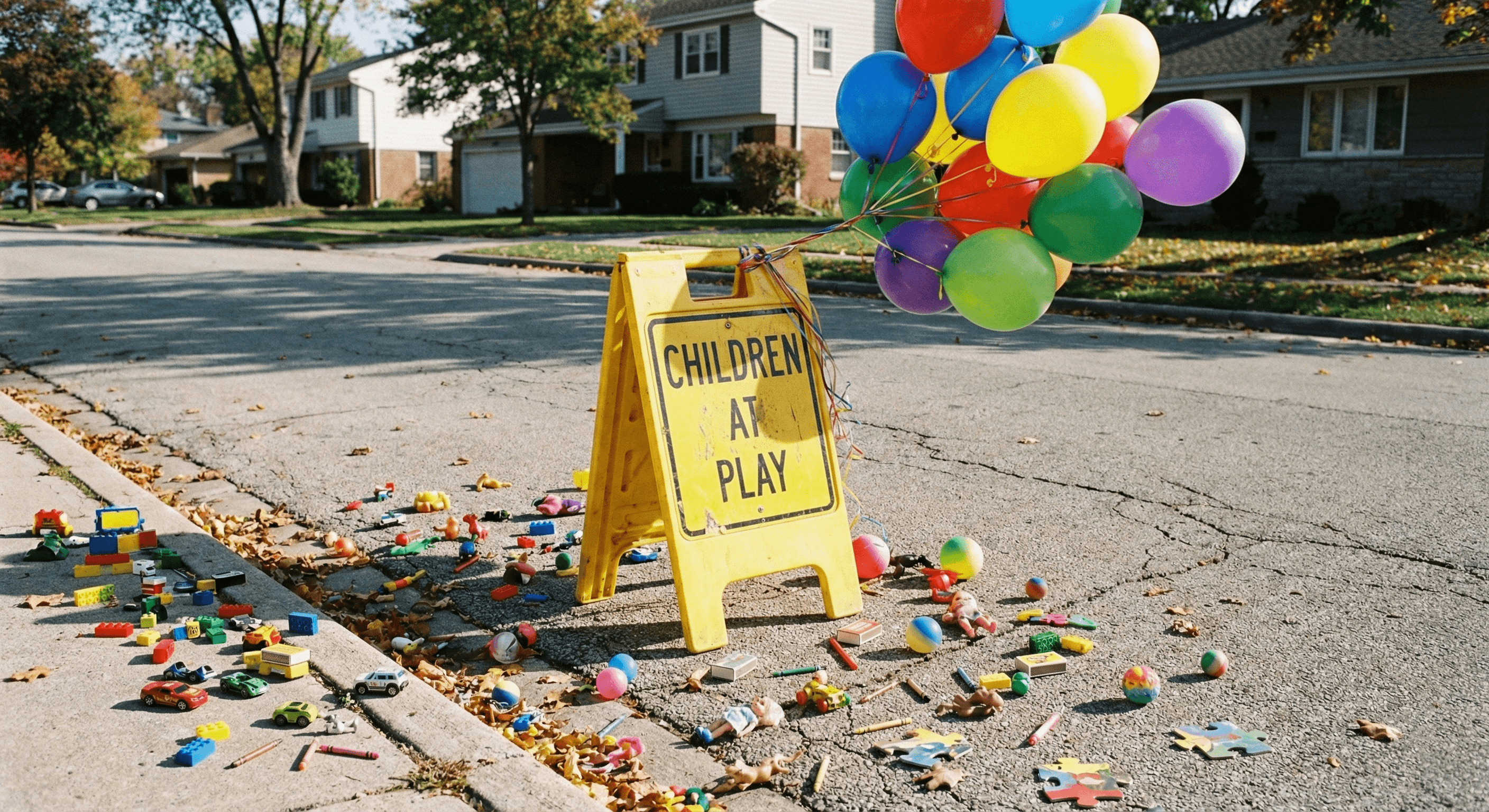
Designed a 1×4 factorial randomized field experiment (n=497 vehicles) testing four conditions: control, sign only, sign + toys, and sign + toys + balloons. Measured free-flow speeds using video analysis with robust standard errors (HC1/HC3) for causal inference.
Technologies & Methods
The Results
Measurable Speed Reduction
Sign + toys reduced average speed by 1.9 mph and increased 25-mph compliance by 18 percentage points. Signs alone had no meaningful effect, and adding balloons provided no added benefit, suggesting that visible child-related objects were the key intervention.